Valletta Soup Kitchen wins European Citizen’s Prize

Our warmest congratulations go out to Father Marcellino, as well as to the team of devoted volunteers and sponsors, whose collective efforts have played an instrumental role in bringing this wonderful project to its successful fruition.
Anuschka von der Heyden


Valletta Soup Kitchen wins European Citizen’s Prize

‘Let’s all spread goodness through simple acts of service and open hearts’: soup kitchen director

The Valletta Soup Kitchen has been awarded the European Citizen’s Prize, an annual prize awarded to projects that make outstanding contributions to the promotion of common values and fundamental rights.

The Soup Kitchen, which is run by the Franciscan Friars, offers meals, bathroom facilities and access to healthcare and social workers to materially deprived people.

The prize is awarded by the European Parliament every year, to an individual or entity in each EU member state. Malta’s winner in 2022 was The Daphne Caruana Galizia Foundation.

Accepting the prize in a ceremony on Friday, Soup Kitchen director Fr Marcellino Micallef said that the project acts as a safe harbour where those in need can find an ear that listens and an open heart.

“Every day we meet our brothers who have their good and bad qualities, as we all do, and more importantly we strive to form a personal relationship with every single one of them,” Micallef said.

“We try to achieve this by giving these people a voice, hearing their stories, learning from their experiences, understanding their needs, becoming their friends and receiving the mysterious wisdom that God wished to impart through them.”

Micallef said that all in society should strive to “spread goodness” through acts of service and do their best to keep their arms open for those struggling to keep their heads above the water.

He also thanked the “army” of volunteers who show up daily to make the soup kitchen a reality as well as the benefactors who make running the project possible.

The soup kitchen, Micallef continued, is home to people of all beliefs and also those with no beliefs, because compassion for humanity transcends differences.

“The number of people in our society who discard the poor is not little,” Micallef said.

“Every day you hear stories of people who ended up without a roof over their head and are living on the streets, sleeping in their cars or squatting in some abandoned place.”

“The only thing that these people need is love and care. I wish for everyone to have a proper roof over their heads, the hundreds who sleep outdoors and the thousands who are living in a garage. Till yesterday I was still dreaming, but today the dream is slowly becoming a reality.”

PN MEP David Casa, who nominated the project for the prize, congratulated the Soup Kitchen on their win.

“I congratulate Fr Marcellino for the well-deserved recognition of his efforts during these past challenging years. Through his work, the Soup Kitchen upheld the dignity of those who found themselves in a vulnerable situation when they had nowhere else to turn,” Casa said.

However, Casa continued, the fact that the safety net of the Soup Kitchen has become a societal need is a clear sign of policy failure.

“Nobody should need to rely on soup kitchens to feed their children,” he said.

“Poverty needs to be addressed effectively, and the need for soup kitchens is a sign that the system has failed.”

While noting the need to enact policy with a much stronger social conscience, Casa commended Fr Marcellino for ensuring that “indifference did not trump solidarity”.

Source: Times of Malta


Watch: A luxury Vittoriosa hotel with a ghost story to tell

Palazzo Bettina was home to a murder mystery legend. Now it’s a hotel

Tucked away in the central courtyard of a newly restored palazzo in Vittoriosa is a small archway that was once the opening into an old baker’s oven and the source of a ghostly legend.

For centuries, locals passed down the story of a young boy, the son of a wealthy baron, who they say was killed in the early 1700s by greedy relatives for his inheritance and pushed into the oven.

Many have, over the years, told and retold ghost stories about the building, which spent decades in a state of abandonment.

Now, the palazzo has been painstakingly restored into a four-star luxury boutique hotel, Palazzo Bettina, which forms part of the IBB Hotel collection.

The building has a rich history. It was owned and lived in by a lady-in-waiting to the queen of Naples before it became a convent, a British military hospital and a property used by Malta’s first saint Dun Ġorġ Preca.

A murder mystery

But as tourist guide Mario Cacciottolo of Dark Malta Tours explains, it is perhaps best known among locals for the legend of the young boy.

“The story goes that there was a baron, Joseph Gauci from Mdina, and he had a son who was his only heir. His relatives lived in the palazzo and they knew they would be next in line with the boy gone.

“They invite the boy to spend the weekend at their home. The boy goes. On arrival, he ties his donkey in the Vittoriosa square, goes to St Lawrence church and prays and goes to the palazzo,” Cacciottolo recounts.

But the weekend passed and the boy never returned home, as planned. The baron sent his servants to check and the family informed them the boy had not arrived. The area was searched. The donkey was found still tied in the square. But the boy was never found.

“Furious and heartbroken, the baron accuses the relatives of getting rid of the boy and cuts them out of his inheritance and leaves the building to the Church,” Cacciottolo says.

The story is a popular one on his dark history walking tours of Vittoriosa.

The last person to live there

But for Lawrence Zammit, the building is much more than a historic palazzo with fascinating stories to tell.

One of the rooms, located on the ground floor near the palazzo’s original main entrance, on St George’s Street, was once part of the 78-year-old’s childhood home.

“Our door was number 4. Now there is no number 4 any longer. The door has been turned into a window to a guest room,” says Zammit as he steps into that room for the first time since his family moved out in the 1980s.

“The ceiling is as I remember it,” he says walking towards a window, accompanied by his wife Anna. “This is where I used to study and sleep. I remember seeing the sea reflecting on the ceiling. It was like a waterfall.”

He also remembers hearing stories of ghosts.

“But I never heard or saw anything. I was not scared of ghosts. I was scared that part of the ceiling would fall onto me. I think my family was too noisy to hear ghosts. We probably scared them,” he jokes.

He lived there with his parents and five siblings from the mid-1940s – just after the war – until he was 28 years old and married Anna. His family stayed there until the 1980s. “I think we were the last family to leave,” he says.

After that the building was abandoned. But the locals kept its stories alive through word of mouth.

A beautiful businesswoman

The palazzo is named after Elizabeth Dorell, known as Lady Bettina, who  moved into the building after the events of the fabled murder mystery.

A part of high society and lady-in-waiting to the queen of Naples, the beautiful businesswoman owned properties in Gudja and Valletta.

“Legend has it that when Napoleon was in Malta, he courted Bettina,” says Cacciottolo.  She was also famous for being the aunt of Fabrizio Sceberras Testaferrata, one of the most famous Maltese cardinals.

Following her death, in 1829 the palazzo was given as a convent to St Emily de Vialar.

In 1832 she founded the Congregation of the Sisters of St Joseph of the Apparition and she settled there before the mid-1800s. It is said the nuns left because of the sounds they heard at night.

Sometime later, the building was used as a British Military Hospital.

“One night there was a Scottish soldier in a state of shock on the floor. When he was asked what had happened, he said: ‘I saw a boy climbing out of the oven’,” Cacciottolo says.

The legend was born.

Later, Dun Ġorġ Preca, a Maltese Catholic who was canonised as Malta’s first saint in 2007, made use of the property. It served as one of the seats for the Society of Christian Doctrine, which he founded.

Just before World War II, the building was split into tenements and was damaged during the war, which is how Lawrence remembered it as a boy. Now he is glad to see it restored to the state it is in today. “They did a great job,” he says.

A new life

In 2017 the building was bought by the Sormani family, who have extensive experience in recovering and renovating ancient buildings to return them to their original splendor.

The family bought a crumbling building: with collapsed balconies, broken doors and windows and unsafe ceilings – and brought it back to life.

The result of the investment can be seen in the complete renovation of the building, transformed into a luxury boutique hotel including a rooftop pool overlooking the marina and St Lawrence’s church next door.

Palazzo Bettina is the eighth hotel in the IBB Hotel Collection portfolio, which operates several hotels in Poland and Germany, and the Gran Macina Malta in Senglea. When the hotel opened a few weeks ago, many curious locals turned up to have a look inside the building, says front office agent Charlie Gelaesen.

“It is a small hotel with 13 rooms which allows us to offer a tailored service to guests. Of course, we skip room 13. During the renovation the point was to respect the building and its history – this is one of the values of the company,” she says.

In fact, its extensive history is included on the website of Palazzo Bettina – the backdrop to a legendary murder mystery, the home to an extravagant businesswoman, a place that hosted nuns, wartime casualties, Malta’s first saint…. and now hotel guests.

Source: Times of Malta

Von der Heyden Group pushes for sustainable solutions in hospitality and construction

The Group targets a 40% reduction in emissions in its hospitality operations by 2030.

“With real estate and development being key areas of business for our Group, the pressure on companies like ours in the context of the European Green Deal, evidently, has become higher and from our end, there will be no corner-cutting,” says Anuschka Von Der Heyden, Head of Sustainability at Von Der Heyden Group.

Founded in Germany in 1989 by Sven von der Heyden as a high-quality niche player in the European real estate market and based in Malta for the past ten years, the Group today has operations in real estate investments, development, hospitality, and catering in around 20 cities across Europe.

The Group is currently engaged with the fourth development phase of its Anders Square project in the city of Poznań in Poland, a 26-storey A-class office tower which is expected to be completed by 2026.

The company has just published its latest ESG report, with which it aims to position itself as one of the first Malta-based firms to share extensive details on its efforts to reach EU-wide sustainability targets.

“In our latest report, we outline how the Group aims to reduce emissions in its hospitality operations by 40% by 2030,” states Ms Von der Heyden.

She explains how since its inception, the Group always sought to uphold the highest standards in investments and operations, especially in terms of its social and governance commitments.

“Amid unprecedented global carbon emissions, it is crucial for all stakeholders involved to reduce their carbon footprints and this principle remains central to our commitment to sustainability,” she added.

For the first time, data released by Von der Heyden Group not only relates to Scope 1 and Scope 2 emissions, which essentially consist of the firms’ direct and indirect activity, but also shared details of Scope 3 emissions which cover the activity across its value chain, including its hospitality suppliers.

“Reporting about Scope 3 was crucial not only because it prompted us to engage with our suppliers and stakeholders but it has fostered better relationships and improved processes upstream and downstream. In turn, this has also helped us create shared value through collaboration and enhanced our environmental efficiency,” explained Ms Von der Heyden.

Sustainability and Construction

And while construction and sustainability rarely feature hand in hand in Maltese discourse, Ms Von der Heyden is keen to highlight how things can be done differently in a way that also yields financial benefits.

“The company has for several years focused on developing A class LEED certification compliant buildings and our ambition is to take this way of doing things into the future with all our new developments. In fact, all our Anders Square project developments have been built using the most modern energy-efficient solutions, long before certification in this area became a standard.”

“We did this because we truly wanted to create places that take care of the well-being of their users and are sustainable for the environment and the local community. Malta too, would do well to seek these high international standards to upgrade its unique proposition, especially in terms of its tourism industry,” added Anuschka Von der Heyden, while highlighting how such practices are increasingly sought after by large institutional investors when selecting assets to invest in.

Von der Heyden Group’s AND2 building in Poznań features some of the latest and most innovative sustainable solutions, including environmental quality, location, water efficiency, energy and atmospheric use, as well as materials and resources.

In addition, consideration is being given to the inclusivity and accessibility of spaces according to universal design principles and the impact on surrounding areas.

“We are well aware of our obligations towards the community hosting our projects, and in addition to modern office spaces designed to reflect social trends and the evolving needs of the workforce, each property also includes areas accessible to the wider community. For example, the AND2 building will feature a modern medical facility and a private kindergarten with a public gym for children,” notes Ms Von der Heyden.

Is it always a question of money?

“Our ESG considerations are factored in from the moment we start thinking about a new development project. More investors are increasingly looking to invest in energy-efficient buildings and projects with sustainability certifications and as a result, the Group will keep setting aside budgets to make its projects more water and energy-efficient and when feasible, to purchase on-site renewable energy sources,” she adds.

Reducing energy consumption is being targeted also in the company’s hospitality business the firm is intent on achieving its targets in this regard too.

“This is not just about direct costs but about attracting the conscientious guest who cares about the environment and society and who seeks entertainment and leisure destinations that actively lessen their negative impact on the community around us.”

This approach is now also central to the Group’s future strategy for its IBB Hotel & Cugó Gran Hotel Collections which already operate two in Malta, IBB Hotel Palazzo Bettina and the Cugó Gran Macina, with a third one opening soon.

And despite its plans for the eventual addition of new properties which will potentially raise total emissions, the company has presented a plan to reduce the overall carbon footprint per square metre which will require the Group to invest in higher quality, more eco-friendly buildings and spaces.

According to Anuschka von der Heyden, the company’s ESG report outlined how its hospitality operations will see the biggest effort to improve sustainability.

“This is why it is important to have reliable data at hand. We know that hospitality is one of our most carbon-intensive activities, so we are putting an extra effort to find solutions and implement measures to reduce our carbon footprint on that front.”

“We have made sustainability one of Cugó Gran Hotel Collection’s key pillars because the Group’s future lies in sustainable luxury tourism,” she concluded.

Source: The Malta Independent

Von der Heyden Group pushes for sustainable solutions in hospitality and construction

The Group targets a 40% reduction in emissions in its hospitality operations by 2030.

“With real estate and development being key areas of business for our Group, the pressure on companies like ours in the context of the European Green Deal, evidently, has become higher and from our end, there will be no corner-cutting,” says ANUSCHKA VON DER HEYDEN, Head of Sustainability at Von Der Heyden Group.

Founded in Germany in 1989 by Sven von der Heyden as a high-quality niche player in the European real estate market and based in Malta for the past ten years, the Group today has operations in real estate investments, development, hospitality, and catering in around 20 cities across Europe.

The Group is currently engaged with the fourth development phase of its Anders Square project in the city of Poznań in Poland, a 26-storey A-class office tower which is expected to be completed by 2026.

The company has just published its latest ESG report, with which it aims to position itself as one of the first Malta-based firms to share extensive details on its efforts to reach EU-wide sustainability targets.

“In our latest report, we outline how the Group aims to reduce emissions in its hospitality operations by 40% by 2030,” states Ms Von der Heyden.

She explains how since its inception, the Group always sought to uphold the highest standards in investments and operations, especially in terms of its social and governance commitments.

“Amid unprecedented global carbon emissions, it is crucial for all stakeholders involved to reduce their carbon footprints and this principle remains central to our commitment to sustainability,” she added.

For the first time, data released by Von der Heyden Group not only relates to Scope 1 and Scope 2 emissions, which essentially consist of the firms’ direct and indirect activity, but also shared details of Scope 3 emissions which cover the activity across its value chain, including its hospitality suppliers.

“Reporting about Scope 3 was crucial not only because it prompted us to engage with our suppliers and stakeholders but it has fostered better relationships and improved processes upstream and downstream. In turn, this has also helped us create shared value through collaboration and enhanced our environmental efficiency,” explained Ms Von der Heyden.

Sustainability and Construction

And while construction and sustainability rarely feature hand in hand in Maltese discourse, Ms Von der Heyden is keen to highlight how things can be done differently in a way that also yields financial benefits.

“The company has for several years focused on developing A class LEED certification compliant buildings and our ambition is to take this way of doing things into the future with all our new developments. In fact, all our Anders Square project developments have been built using the most modern energy-efficient solutions, long before certification in this area became a standard.”

“We did this because we truly wanted to create places that take care of the well-being of their users and are sustainable for the environment and the local community. Malta too, would do well to seek these high international standards to upgrade its unique proposition, especially in terms of its tourism industry,” added Anuschka Von der Heyden, while highlighting how such practices are increasingly sought after by large institutional investors when selecting assets to invest in.

Von der Heyden Group’s AND2 building in Poznań features some of the latest and most innovative sustainable solutions, including environmental quality, location, water efficiency, energy and atmospheric use, as well as materials and resources.

In addition, consideration is being given to the inclusivity and accessibility of spaces according to universal design principles and the impact on surrounding areas.

“We are well aware of our obligations towards the community hosting our projects, and in addition to modern office spaces designed to reflect social trends and the evolving needs of the workforce, each property also includes areas accessible to the wider community. For example, the AND2 building will feature a modern medical facility and a private kindergarten with a public gym for children,” notes Ms Von der Heyden.

Is it always a question of money?

“Our ESG considerations are factored in from the moment we start thinking about a new development project. More investors are increasingly looking to invest in energy-efficient buildings and projects with sustainability certifications and as a result, the Group will keep setting aside budgets to make its projects more water and energy-efficient and when feasible, to purchase on-site renewable energy sources,” she adds.

Reducing energy consumption is being targeted also in the company’s hospitality business the firm is intent on achieving its targets in this regard too.

“This is not just about direct costs but about attracting the conscientious guest who cares about the environment and society and who seeks entertainment and leisure destinations that actively lessen their negative impact on the community around us.”

This approach is now also central to the Group’s future strategy for its IBB Hotel & Cugó Gran Hotel Collections which already operate two in Malta, IBB Hotel Palazzo Bettina and the Cugó Gran Macina, with a third one opening soon.

And despite its plans for the eventual addition of new properties which will potentially raise total emissions, the company has presented a plan to reduce the overall carbon footprint per square metre which will require the Group to invest in higher quality, more eco-friendly buildings and spaces.

According to Anuschka von der Heyden, the company’s ESG report outlined how its hospitality operations will see the biggest effort to improve sustainability.

“This is why it is important to have reliable data at hand. We know that hospitality is one of our most carbon-intensive activities, so we are putting an extra effort to find solutions and implement measures to reduce our carbon footprint on that front.”

“We have made sustainability one of Cugó Gran Hotel Collection’s key pillars because the Group’s future lies in sustainable luxury tourism,” she concluded.

Source: Business Today

FROM SUCCESS TO SUSTAINABILITY: A ROADMAP FOR VALLETTA AND THE GRAND HARBOUR

Malta’s Valletta and Grand Harbour areas are at a crossroads between preservation and growth. As experts weigh in, it becomes clear that while significant progress has been made, a unified, long-term strategy is essential to unlocking their full potential. Victor Calleja explores the path forward through the eyes of industry leaders.


Malta is at the centre of a never-ending debate about the goose and the golden eggs. About loving the gold of the eggs but not caring enough for the goose. How true is this? What is lacking in the vision for some of Malta’s prime assets, Valletta and the Grand Harbour area?

Should more be done? Should we look at what has been achieved, what has been done, and what can’t be undone, and devise a proper strategy for that area in conjunction with the rest of Malta? Is there one vision, one uniting vision, that can genuinely be seen as a national one?

Three experts in the field, three people involved in the world of property and hospitality, give Money their views on where we stand and where we should be going.

Interestingly, the three agree that Valletta has been a success story and that we need to build on this success, and all agree that the Grand Harbour region has all the ingredients to be another success story. All agree that a lot still needs to be done and that we must formulate a way forward to harness the good these areas offer. They all believe in the future as long as we learn from the past. The consensus is that everyone involved, residents, entrepreneurs, government, tourism entities, and heritage organisations, must be part of the vision for the region.

Here’s what Sven von der Heyden, Andrei Imbroll and Raphael Aloisio had to say about their experiences and their expectations.

Sven von der Heyden

Chairman and founder, Von der Heyden Group


Where do Valletta and the Grand Harbour stand today?

I’m totally mesmerised by Valletta—by its history, by everything about it. I feel awed when I think of how it came to be, how the Knights of Malta built it after the Great Siege as a fortress to withstand any new attacks by the Ottomans. Interestingly, it’s a capital that hasn’t been ransacked—aside from the bombing in WWII, of course. It’s an incredible story of resilience and success.

From the 1960s to just before 2010, little happened in the city. With investors moving in and turning it from nothing, its revival has been a successful turnaround.

Now, because the Maltese are so good at business, it has gone overboard. It’s definitely too noisy and disorganised. But with some care, organisation, more enforcement, and more planning, it can be improved. It needs to be managed carefully, with consideration for the residents and the flow of the city. From the heritage perspective, excellent work has been done to ensure developments respect the capital city’s history.

If regulations to improve the quality of development are implemented and enforced, Valletta can be in top shape in 20 years.

The Grand Harbour itself is beautiful and breathtaking. The surroundings offer plenty of potential, but a lot needs to be done. The industrial parts, including the shipyards, are useful and necessary but are an eyesore. But this is part of the fabric of any city or string of cities. Can you change that? Can they go somewhere else? Maybe, maybe not.

But I do believe in the opposite side of the Grand Harbour. In fact, my company and I have put our money where our mouth is and invested heavily in this area. When we bought the first property in Senglea, people thought we were mad because the area was in rather bad shape. It paid off, as the area has improved a lot. We have now also invested heavily in Vittoriosa. The sheer beauty of the location speaks for itself. And the success seen in Valletta will, I’m sure, be replicated in this area, too.

What are the key challenges? Is additional intervention needed?

The noise levels need to be lowered. Traffic needs to be controlled further, and more pedestrianisation needs to be imposed for longer hours. Obviously, the ring road around Valletta works perfectly, but more enforcement is needed to keep the traffic flowing. Traffic in Malta—like noise—is a macro problem for the whole of Malta that needs to be solved not just for quality tourism but for any tourism and the locals.

The city’s whole organisational structure needs to consider anyone connected to Valletta. Deliveries can’t happen at all times of the day, and cleanliness needs to be improved. Valletta needs its residents to remain relevant, unique, and comfortable in a vibrant but liveable city.

Regarding the utilisation of properties, for example, on Republic Street and other streets, the rents for the ground floors keep skyrocketing. However, if you look at the first, second, and third floors, often there is nothing. Closed shutters and empty. That is something that I think requires intervention. Incentivise the owners to have these buildings restored and converted into residences. If necessary, the government could subsidise the rent. This is just one idea, but more ways can be found to keep Valletta’s residency vibrant.

What should the vision for Valletta and the Grand Harbour be?

Regarding the future, I think Valletta is moving in the right direction. But we need to sell ourselves better.

As an island involved in the tourist development of Valletta and the Grand Harbour, Malta must raise the bar. In my view, we need fewer tourists but ones with deeper pockets. We all see how congested Malta is; the infrastructure just can’t take it.

In the long term, we need to double the daily spending per client and concentrate on quality in everything we do.

What does quality tourism mean for the region? And how can it balance luxury, sustainability, and cultural preservation?

It simply means double the room rate. Don’t make food more expensive because Malta has a great gastronomic offering, but it is already quite expensive.

Malta already has many great basic assets, from the airport to the history, heritage, and amazing sites. However, it needs to focus more on infrastructure, cleanliness, noise, and the environment. Taxi services should also be improved.

I also believe the government should pay more attention to ecological investments, such as green zones and areas. You just need to invest money in finding areas and planting trees and more trees. We do need more shade in Malta.

How can Valletta and the Grand Harbour achieve these long-term goals?

Ideally, all stakeholders should get together, forget their personal interests, and formulate a vision and strategy. Valletta can benefit from getting, say, 10 or 15 people who have succeeded in Valletta and the Grand Harbour and who can present their views and ideas for a way forward.

The precondition of this gathering—a think tank or whatever—is that anyone involved in it must forget all about their business. Think just about Valletta, Grand Harbour, and Malta. Think about the future. Get the mayors involved, get their input and their own vision, and maybe formulate a report that goes to the government. If enough pressure is put on the authorities, then action will be taken not just in the region but even in other areas.

Should Valletta be approached as an isolated destination, or should a broader Grand Harbour regional strategy be developed?

I think it should be a broader strategy. It has to go hand in hand, not just with the Grand Harbour, but even with the rest of Malta and Gozo. Valletta is a crown jewel. Mdina, obviously, is another crown jewel. It needs the rest because people who travel nowadays want to go beyond the area they are in.

Do you have reason for optimism?

I love Malta, and yes, I believe in it. That’s why I invested here and am still investing. And I would also invest in Valletta if, or rather when, the right opportunity arises.


Andrei Imbroll

Chief executive officer, VBL Group


Where do Valletta and the Grand Harbour stand today?

Valletta has been a great success story. In 2010 or thereabouts, the authorities envisioned revitalising the city. Chapeau to them. However, it was the private investors who had the courage to take the plunge and invest in the city. We have progressed by leaps and bounds. What is needed now is to determine what we want Valletta to be. It’s a totally different story for the Grand Harbour area, which is like what Valletta was 25 years ago. The process has started, and we are seeing restorations happening and businesses flourishing. I’m sure it will take time, but we’ll get there.

The Grand Harbour region and Valletta are critical if we want to attract high-end tourists. We need to create a strategy for both of these regions. I believe Valletta today is touristically a power to be reckoned with. It probably also has the best accommodation in any old European historical town.

Overall, the development over the last 10 to 15 years has been done with great sensitivity. But why should I, in 2025, still see a mountain of garbage on a street corner in Valletta? Why should the roads of Valletta be packed with delivery trucks from early morning to mid-morning? Before 10.30, you can’t have a proper Valletta experience, the experience of living in an awesome place.

It’s all about logistics, as with the overabundance of chairs, tables, and blaring music. I’m not saying these should be completely forbidden—far from it—but with proper rules and enforcement, the whole experience will be raised three or four notches in terms of quality.

How does Valletta compare to other Mediterranean destinations in terms of tourism appeal, infrastructure, and economic development?

There are similar cities to Valletta, but nothing is as homogeneous as Malta’s capital. It is the capital, the touristic centre, a hub of commercial activity, and a residential city as well, even though there are challenges in that area.

I think that’s something we really need to protect. Valletta is special. That is why, in fact, our company continues to focus on investing exclusively in Valletta.

Nowadays, tourists look for an authentic experience, and Valletta can deliver that. Walk down to the lower parts of the city, to areas that are predominantly residential, and you will find that tourists enjoy walking down these areas, getting lost, seeing the clothes hanging outside, and seeing the kids playing in the streets.

Valletta is a very successful city, and this is all thanks to urban planning. When it was built and devised by the Order, it was all zoned. Shopping, entertainment, residential, and artisanal all had their specific areas. This is getting lost, which is causing the majority of problems nowadays.

When we started in 2012, it was very difficult to get a permit for a bar outside the core area in the upper part. Now, anyone who applies gets a permit practically anywhere. We need to go back to having designated areas.

Politicians tell us that they don’t want to interfere with the market. But this is not interfering; policymaking directs the market to what you want to see.

How do we compare with the other destinations?

I think we compare extremely well. Mismanaged tourism, which I prefer to over-tourism, is a problem not just here but in most other destinations. Better strategies to open and develop new attractions will help. We are seeing good initiatives right now from Heritage Malta and entrepreneurs. You deflect people in different areas. With better management, I think the entire product would benefit.

What should be the vision for Valletta and the Grand Harbour?

We need to decide whether we want high-end tourists to get away from just an emphasis on numbers and concentrate on quality, and my answer is yes. Politicians and the local population need to embrace these ideals.

If we had to work collectively, with direction from above, on getting a better quality of customer, we would get better prices, and everyone could reduce chairs and tables. We would also get better staff, offer staff training, and have less pressure on the business in general because the margins on a quality product are higher. There are ways to create sustainability and growth in the bottom line without growth in numbers, which is what many people, I think, advocate for today.

At the moment, we are doing nothing to define the product. My fear is that Valletta will become Malta rather than Malta becoming Valletta. As I said before, Valletta is the only place where urban planning ultimately gave us what we have today. Without Valletta and the Grand Harbour, Malta would be any other island in the Mediterranean.

We would have very little to identify us. We need to devise a strategy for Valletta, work on it and use it in other towns and villages.

Valletta is very attractive for high-end tourists, but it lacks high-end retail, cleanliness, organisation, and flow. We really need to concentrate on those areas.

So far, the experience is still good. I think we can easily improve it with an effort on all our parts.

What does quality tourism mean for the region, and how can it balance luxury, sustainability, and cultural preservation?

Malta is far from a high-end luxury destination, and I doubt we can get there in the foreseeable future. That doesn’t mean we cannot have quality tourism. I think Malta can be a super destination for high-earner Europeans.

We offer a great cultural experience, and we have achieved a very high level in the food world.

I’m afraid we still need to work on the whole experience in the Grand Harbour region. But what we did over a period of 10 years in Valletta, we can do there.

Floriana is beautiful and has so much potential. Marsa, in my view, could also be developed. The minute you start restoring and renovating, the private sector finds investment attractive. The Three Cities have seen huge improvements.

How can the region achieve its long-term goals?

We need to attract a different client and upgrade the product. MTA does a fantastic job attracting tourists to Malta, but I would never try to attract the kind of tourist who will leave dissatisfied. We need to work on repeat business. Get the top earners to come and visit and then get their families. We need to work on this, and with a concentrated effort—and with an upgrade in the product—we can manage.

Malta is now well-connected, but we need legacy airlines to attract higher-end tourists.

Should Valletta be approached as an isolated destination? Or should a broader Grand Harbour regional strategy be developed?

You need to have a strategy for the entire island. Not just Valletta.

What are the key opportunities and reasons for optimism regarding the region’s tourism potential?

We have a fantastic product. The less we do to it, the better. I think the reason for my optimism is that the fabric is there. It’s like a diamond, which just needs to be chiselled. More specifically, the Grand Harbour needs to be chiselled and Valletta polished.


Raphael Aloisio

Retired Partner, Deloitte Malta


How do you feel about the Valletta and Grand Harbor concept? Do you see them as one entity, or do you view them separately? How do you feel about their current status?

Well, the idea is interesting overall. When discussing tourism or anything related to it in a broader sense, you first need a product designed for a target audience. If you’re aiming for a very conservative strategy targeting one segment of people who just want to go from restaurant to restaurant, bar to bar, then no, it doesn’t work. That’s a very narrow strategy with a very specific audience.

But if you’re considering a broader approach, something that taps into the area’s culture and heritage and aims to create a more comprehensive experience for a wider market, then yes, it could definitely work.

Now, there’s a business angle to consider as well, which might sound more pragmatic than idealistic. If we’re talking about high-end tourism, which many people already associate with Valletta and part of Grand Harbour, then the question becomes: how do we target those people? Are Valletta and the Grand Harbour going to be the sole destinations, or do we want to attract visitors to these areas and then let them explore the rest of Malta?

One thing I’d caution against is overgeneralising or making claims without a clear, strategic plan and a realistic timeline. For instance, look at St. Julian’s, which took 15 years to evolve into a five-star destination. Valletta will need the same time and investment to shift its focus toward a high-end market. We’re talking about improving assets and overall product upgrades to get this transformation. I also think that high-end does not necessarily exclude anyone else. The high end can coexist with the non-high end if done well and curated well.

Valletta started its revival in 2007, and over time, we’ve seen the city evolve from a neglected area, basically a dead city, to what it is today. The shift to a high-end tourism destination will require patience, consistency, and vision.

So, you see the Valletta and Grand Harbor strategy as part of a much bigger, long-term plan?

Yes, exactly. It needs to be part of a broader strategy, one that includes creating a new niche sector targeting different seasonal markets. Valletta and the Grand Harbour aren’t typical summer destinations, and that’s part of the challenge. The long-term strategy has to evolve carefully, with a clear focus on sustainability.

As we talk about high-end, we also need to address the practicalities. A lot of the development happening right now targets middle-to-lower categories. If the aim is high-end, there will need to be a more uniform approach to match that vision. You can’t just build boutique hotels and upscale restaurants while only focusing on volume tourism. There must be a balance.

Do you think high-end tourism is compatible with the current offerings in Valletta and the Grand Harbour?

There’s definitely potential, but there needs to be more focus on the cultural and heritage aspects. Valletta already has these elements—churches, auberges, fortifications, and history itself—which could be used to attract high-end visitors. But again, it comes down to numbers. Can Valletta support high-end tourism and cater to the local population that is not part of that high-end market?

The key is to position Valletta in a way that balances both. If we focus solely on tourists, we lose the local flavour that makes the city unique. The answer isn’t to cater exclusively to high-end tourists or the local crowd but to find a sustainable balance between the two.

You mentioned the importance of positioning. Do you think the current strategies for Valletta and the Grand Harbour are clear enough?

Unfortunately, there’s no clear, cohesive strategy right now. Everyone focuses on pointing out and discussing the limitations and challenges rather than the big picture. For this to work, we need to map out a clear vision for where we want to go, starting with a solid foundation for what Valletta and Grand Harbour can offer in the long term.

But on a larger scale, my concern is that no matter what strategies we devise, the real change, or rather the main push, needs to come from the authorities.

The private sector has played a huge role in the success of areas like St. Julian’s. The government’s role has been to facilitate, but it’s been the private sector that’s driven development, and that’s what’s missing in Valletta right now. The private sector needs to take more initiative, but there also has to be a clear strategy, a well-formulated vision, and a plan to support this.

What should the vision for Valletta and the Grand Harbour be?

The vision should be about creating a sustainable, diverse tourism product that appeals to different niches. It can’t be one-size-fits-all. We have strategies for various market segments, whether it’s cultural tourism, high-end dining, or heritage experiences.

Is it a challenge to keep the momentum even when things are going well?

When things are going well, there’s a tendency to let the focus slip. We need to keep that visionary thinking alive. Take the gaming sector, for example—while it was evolving, it didn’t start as high-end. It took time, effort, and a strategy to build. Valletta’s tourism needs the same approach. We must consider where we want to be in 20 years and plan accordingly. We need to climb those steps, and as long as we stay on track, we’ll get there.

What do you think about current tourism strategies and their alignment with local needs?

The challenge is that tourism strategies often focus on volume rather than quality. We need a more balanced approach that addresses both. The MTA should help promote specific niche markets, like religious tourism, which could be developed further. However, the real work needs to be done by those outside of the MTA, who are driven not by vested interests but by the bigger vision.

Is Valletta’s development hindered by trying to copy other destinations, or is there room for unique strategies?

We need to be cautious when looking at other destinations for inspiration. The key is identifying what works in other places but adapting it to Malta’s unique characteristics. Valletta and the Grand Harbor need their strategy tailored to their specific needs rather than copying what’s been done elsewhere.

Do you think that Valletta and the Grand Harbor can become Malta’s number one tourism sector if the right strategy is implemented?

Yes, I believe it can be Malta’s best tourism sector. Valletta has all the right foundations—culture, dining, heritage—it’s all there. With the right plan, I think it can become a truly exciting destination, and it won’t have to come at the expense of other areas. Valletta and the Grand Harbor can be reformed to become high-end tourist attractions without compromising what already works for the middle-tier tourism market.

Do you think the region can thrive without significant public sector intervention?

I think the public sector has an important role to play, but it should be more of a facilitator than a leader. The private sector should drive the strategy, but the government must support it with the proper infrastructure and incentives. There must be a clear distinction between what the public sector can do and what the private sector should handle. If the government can provide targeted incentives for quality developments, like five-star hotels, that could make a big difference.

How do you see the region’s future in terms of development?

The future is bright if we approach it strategically. We need to think long-term and be willing to make the necessary investments in infrastructure and product development. The private sector needs to be more entrepreneurial, and the public sector should provide the support required to bring this vision to life. It won’t be easy, but it’s achievable.

Source: Money

Tourism: Are we truly ready to go for quality?

Are we truly ready to go for quality?

Malta’s national tourism strategy needs to be refined and experience-driven offering that prioritizes excellence and sustainability to attract more discerning travellers. “The country needs to understand that quantity does not always equate to quality,” warn Sven von der Heyden and Samuel Santos, two leading figures behind some of Malta’s most luxurious properties in the hospitality sector.

Samuel Santos Gordillo“Indeed, our principal focus has been quality,” says Mr Santos, Director at IBB Hotel and Cugó Gran Collection, two high-end hospitality brands with exclusive properties on the Maltese islands, including the first IBB Hotel, Palazzo Bettina, at the Vittoriosa Waterfront.

Santos noted that Palazzo Bettina has registered an excellent start in its first fifteen months of operations with an annual occupancy at around 70%, exceeding the hotel’s expectations. A very high percentage of customer satisfaction was also recorded, exceeding 96% according to Reviewpro.

Santos announced that the company will be adding another luxury hotel to its portfolio, the Cugó Gran Vittoriosa, which is expected to open in spring.

But as competition for higher-end tourism heats up in the Mediterranean, calls for Malta to focus on quality rather than quantity continue to increase.

“The Maltese tourism industry stands at a critical juncture, and now is the time to seriously focus on its quality offering if the country wants to elevate its profile on the international market,” he noted.

Von der Heyden acknowledged that attracting quality tourism requires very hard work.

Sven von der Heyden

“The whole ecosystem needs to work together as a unified front to continue strengthening relationships, partnerships, and collaborations between all stakeholders including the Maltese tourism board as well as internationally. It’s all connected and only a collective effort can help elevate the island’s luxury offerings.”

“When we manage to elevate the quality on the island, we will be able to sell Malta as a high-quality destination on the international market and attract a bigger audience that truly appreciates Maltese culture, history, and gastronomy,” added Santos.

Both hoteliers underscored the importance of a strong national airline and cohesive hospitality and transportation offerings and noted how Malta is set to surpass 3.5 million tourist arrivals in 2024, marking a formidable rise to the pre-pandemic peak recorded in 2019.

But to Von der Heyden, the hospitality Group’s founder, these rising numbers are a concern.

“The country needs to understand that quantity does not always equate to quality. I am somewhat worried about the sheer number of beds hitting the market in the three- and four-star segment.”

“I believe that Malta has reached a saturation point in most aspects of life. To keep the economy growing, we all need to increase room rates, avoid price wars in winter, and focus on elevating the quality of our current stock of hotels,” he added.

Palazzo Bettina

This perspective appears to align with the government’s plans for Budget 2025, which prioritises quality across sectors, including tourism.

Another major challenge in achieving higher quality remains the persisting lack of talent.

“The struggle to find the right people here in Malta is an increasingly growing concern. We know that this is also a challenge being experienced internationally, but in Malta, this challenge is exacerbated by the fact that we are a small island where talent becomes even harder to find,” adds Mr Santos.

To Von der Heyden, another crucial reason is housing affordability.

“This is no longer an issue but a pressing concern because how can we attract talent when rents for the smallest apartments hover around €1,000 a month which represents 60-70% of a typical net salary? We need an affordable housing program for the hospitality industry, and probably for others too,” he added.

Both Santos and Von der Heyden agree on the private sector’s crucial role in driving Malta’s higher quality offering.

“We have been working on improving quality since 2018,” says Santos. “We’ve done this together with local partners and collaborators, and we are very open to working closely with the government to achieve this goal.”

“Elevating Malta’s product is everyone’s responsibility if we want to ensure our industry’s competitiveness on an international level. Only if we focus on quality and address these national challenges together we can secure a sustainable future for Malta as a leading hospitality destination,” they concluded.

Source: The Sunday Times of Malta

Are we truly ready to go for quality?

Tourism: Are we truly ready to go for quality?

VDHG article Tourism ToM

Calls for Malta to focus on quality rather than quantity continue to increase

Malta’s national tourism strategy needs to be refined and experience-driven offering that prioritizes excellence and sustainability to attract more discerning travellers. “The country needs to understand that quantity does not always equate to quality,” warn Sven von der Heyden and Samuel Santos, two leading figures behind some of Malta’s most luxurious properties in the hospitality sector.

“Indeed, our principal focus has been quality,” says Mr Santos, Director at IBB Hotel and Cugó Gran Collection, two high-end hospitality brands with exclusive properties on the Maltese islands, including the first IBB Hotel, Palazzo Bettina, at the Vittoriosa Waterfront.

Santos noted that Palazzo Bettina has registered an excellent start in its first fifteen months of operations with an annual occupancy at around 70%, exceeding the hotel’s expectations. A very high percentage of customer satisfaction was also recorded, exceeding 96% according to Reviewpro.

Santos announced that the company will be adding another luxury hotel to its portfolio, the Cugó Gran Vittoriosa, which is expected to open in spring.

But as competition for higher-end tourism heats up in the Mediterranean, calls for Malta to focus on quality rather than quantity continue to increase.

“The Maltese tourism industry stands at a critical juncture, and now is the time to seriously focus on its quality offering if the country wants to elevate its profile on the international market,” he noted.

Von der Heyden acknowledged that attracting quality tourism requires very hard work.

“The whole ecosystem needs to work together as a unified front to continue strengthening relationships, partnerships, and collaborations between all stakeholders including the Maltese tourism board as well as internationally. It’s all connected and only a collective effort can help elevate the island’s luxury offerings.”

“When we manage to elevate the quality on the island, we will be able to sell Malta as a high-quality destination on the international market and attract a bigger audience that truly appreciates Maltese culture, history, and gastronomy,” added Santos.

Both hoteliers underscored the importance of a strong national airline and cohesive hospitality and transportation offerings and noted how Malta is set to surpass 3.5 million tourist arrivals in 2024, marking a formidable rise to the pre-pandemic peak recorded in 2019.

But to Von der Heyden, the hospitality Group’s founder, these rising numbers are a concern.

“The country needs to understand that quantity does not always equate to quality.

I am somewhat worried about the sheer number of beds hitting the market in the three- and four-star segment.”

“I believe that Malta has reached a saturation point in most aspects of life. To keep the economy growing, we all need to increase room rates, avoid price wars in winter, and focus on elevating the quality of our current stock of hotels,” he added.

This perspective appears to align with the government’s plans for Budget 2025, which prioritises quality across sectors, including tourism.

Another major challenge in achieving higher quality remains the persisting lack of talent.

“The struggle to find the right people here in Malta is an increasingly growing concern. We know that this is also a challenge being experienced internationally, but in Malta, this challenge is exacerbated by the fact that we are a small island where talent becomes even harder to find,” adds Mr Santos.

To Von der Heyden, another crucial reason is housing affordability.

“This is no longer an issue but a pressing concern because how can we attract talent when rents for the smallest apartments hover around €1,000 a month which represents 60-70% of a typical net salary? We need an affordable housing program for the hospitality industry, and probably for others too,” he added.

Both Santos and Von der Heyden agree on the private sector’s crucial role in driving Malta’s higher quality offering.

“We have been working on improving quality since 2018,” says Santos. “We’ve done this together with local partners and collaborators, and we are very open to working closely with the government to achieve this goal.”

“Elevating Malta’s product is everyone’s responsibility if we want to ensure our industry’s competitiveness on an international level. Only if we focus on quality and address these national challenges together we can secure a sustainable future for Malta as a leading hospitality destination,” they concluded.

Source: Times of Malta

VDHG article Tourism ToM

Cugó Gran Collection celebrates 10 years of excellence in heritage luxury

This year, the Cugó Gran Collection is proudly celebrating its 10th anniversary, marking a decade of redefining heritage luxury through authenticity, elegance, and an uncompromising dedication to excellence.

Since opening its first property in 2015, the brand has become a symbol of refined hospitality, known for its discreet service, immersive experiences, and deep respect for the cultural and historical landscapes in which it operates.

The journey began with the launch of Cugó Gran Menorca, a tranquil estate that set the tone for the Collection’s philosophy: creating more than just luxury hotels, but meaningful places where guests feel connected to their surroundings.

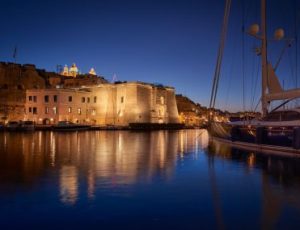
Building on this vision, in 2018 the Collection introduced Cugó Gran Macina Malta, a striking transformation of a 16th-century bastion into a celebrated Design Hotels™ member overlooking the Grand Harbour. Both properties epitomised the Cugó Gran ethos, blending history and modern design with warmth, authenticity, and personalised service.

In 2022, the Collection expanded its guest experience with The Little Bastion, an award-winning Mediterranean restaurant in Isla, Malta. More than a dining venue, it became an expression of the brand’s commitment to local culture, gastronomy, and community.

Over the past decade, Cugó Gran has also embraced forward-looking initiatives, introducing wellness retreats, sustainability programmes, and digital innovation to meet the evolving needs of the modern luxury traveller. Each step reflected the brand’s founding vision of offering experiences that are deeply personal, authentic, and responsible.

“From the very beginning, our vision with Cugó Gran Collection was to create something beyond the traditional five-star experience; something deeply rooted in place, culture, and integrity. Reaching the 10-year mark is not just a milestone, it is a testament to the values we’ve upheld: authenticity, honesty, and a relentless pursuit of excellence,” said Sven von der Heyden, founder of Cugó Gran Collection.

Looking ahead, the brand remains committed to honouring its heritage while embracing the future.

Later this year, in fact, the Collection will expand once more with the opening of Cugó Gran Vittoriosa in Malta’s historic Three Cities, a new property that will mark the beginning of an exciting new chapter and a confident step into the next decade of meaningful luxury hospitality. “This anniversary is a celebration of everything that defines our Cugó Gran brand, from our dedication to heritage to our unwavering commitment to quality and our deep connection to place,” added Samuel Santos Gordillo, CEO of Cugó Gran Collection.

“As we look back on our journey, we also look forward to the next decade with a renewed commitment to creating experiences that are as timeless as they are transformative.”

Source: Times of Malta

Cugó Gran Macina Malta Featured Among Malta’s Outstanding Luxury Hotels

We are pleased to share that Cugó Gran Macina Malta has been featured in a recent Condé Nast Traveller article showcasing some of Malta’s most remarkable hotels.

Located within the historic fortifications of Senglea and overlooking the Grand Harbour, Cugó Gran Macina Malta offers a unique blend of heritage, contemporary design and luxury hospitality. Housed within a landmark structure dating back to the 16th century, the hotel features spacious suites, exceptional dining experiences and breathtaking views across Malta’s famous Three Cities.

This recognition by one of the world’s leading travel publications highlights the hotel’s distinctive character and the dedication of the entire team to delivering memorable guest experiences. We would like to congratulate everyone involved on this achievement.

Cugó Gran Macina Malta continues to strengthen its position as one of Malta’s most unique luxury destinations, combining historical significance with modern comfort in an exceptional waterfront setting.

Read the original Condé Nast Traveller article here:

9 of the best hotels in Malta including palazzos, baroque mansions and boutique boltholes


Von der Heyden Group sells Gdańsk Hotel

International investment firm Von der Heyden Group announced the successful sale of its landmark hospitality asset located on Długi Targ in Gdańsk, Poland, to Corum Real Estate, a flagship investment for the Group.

The sale marks another successful exit for the Von der Heyden Group, highlighting its strategy of identifying, developing, and enhancing high-quality real estate assets across Europe.

Acquired approximately 15 years ago, the project consisted of three historic buildings that were meticulously restored to their original architectural splendour. Following an extensive redevelopment process, the property opened its doors in 2018 as a four-star hotel operated under the Group’s IBB Hotel Collection.

Since opening, the hotel consistently ranked among the best-performing assets within the Group’s hospitality portfolio, achieving outstanding operational results, including record Gross Operating Profit (GOP) levels reaching 40%, underscoring both the strength of the location and the quality of the asset management.

“The Długi Targ hotel project has been a remarkable journey for us, from acquiring and restoring three historic buildings from the 16th century to transforming them into one of the most successful hospitality assets in our portfolio,” commented Sven von der Heyden, chairman and founder of the Von der Heyden Group.

“The consistent performance and strong returns achieved over the years confirmed the dedication of our team and partners. We are proud of what has been accomplished and are confident that Corum Real Estate will continue to build on this success,” added von der Heyden.

Source: The Business Picture